
Who we work with.
Sapienne works with four kinds of technical organizations making high-stakes decisions about markets, products, R&D, and funding. Find the situation closest to yours.
Apply to work with us
Sapienne works with four kinds of technical organizations making high-stakes decisions about markets, products, R&D, and funding. Find the situation closest to yours.
Apply to work with usSapienne works across the deep tech innovation ecosystem, from national labs to startup accelerators to corporate R&D.






Your team has more possible markets, product requests, and growth paths than runway. You need to know where to focus next.
Read this section
Your founders are doing discovery interviews, but some still reach demo day without a clear customer, problem, or market.
Read this section
You need independent stakeholder research before deciding where funding, programs, infrastructure, or partnerships should go.
Read this section
Several technically credible opportunities are competing for the same R&D budget. You need a clearer way to choose.
Read this section Deep tech founders
Your technology works. Your team is stretched. What deserves the roadmap now?
You may have a working product, a few customers, and more possible markets, customer requests, and product directions than your team can chase. The problem is focus: which customers should you pursue next, which requests belong on the roadmap, and what should your team stop building around? If you are bootstrapped, every wrong turn burns runway. If you are raising, investors need stronger proof that demand extends beyond one or two early customers.
Sapienne helps answer those questions with customer and stakeholder research. Tanya shapes the questions, coaches the first discovery interviews, and helps your team compare what repeats. You leave knowing where to focus business development, what customers value enough to pay for, what should shape the roadmap, and what you need to show investors before the next raise.
For a pre-revenue company, traction can include a clearly defined customer, a repeated problem, willingness to pay, repeated product requirements, pilots, LOIs, or budget discussions. By the next raise, you should be able to show investors where demand is coming from, what customers value, and why more capital should go behind this market and product.
Sapienne helps improve the questions, separate feature requests from underlying needs, and compare what repeats across customers. The result is not another stack of interview notes. You leave knowing which market deserves focus, what belongs on the product roadmap, and what your team still needs to test.
Your team runs them. Tanya shapes the questions, coaches the first conversations, and helps interpret what comes back. That keeps the learning, customer relationships, and research skill inside your company, so the next time you enter a market or test a product direction, your team can do more of the work itself.
Yes. Discovery interviews can show which problems repeat, which requirements matter across customers, what they are willing to pay for, and which requests should stay custom. That gives your engineering team a clearer basis for what to prioritize, what to standardize, and what not to spend scarce runway building.
If you are choosing between markets, the 12-week Market Discovery Sprint is usually the starting point. If the market is chosen but demand, value, or buying conditions are still unclear, the four-month Commercial Validation Accelerator fits better. More complex product, market, and funding decisions may call for longer advisory support.
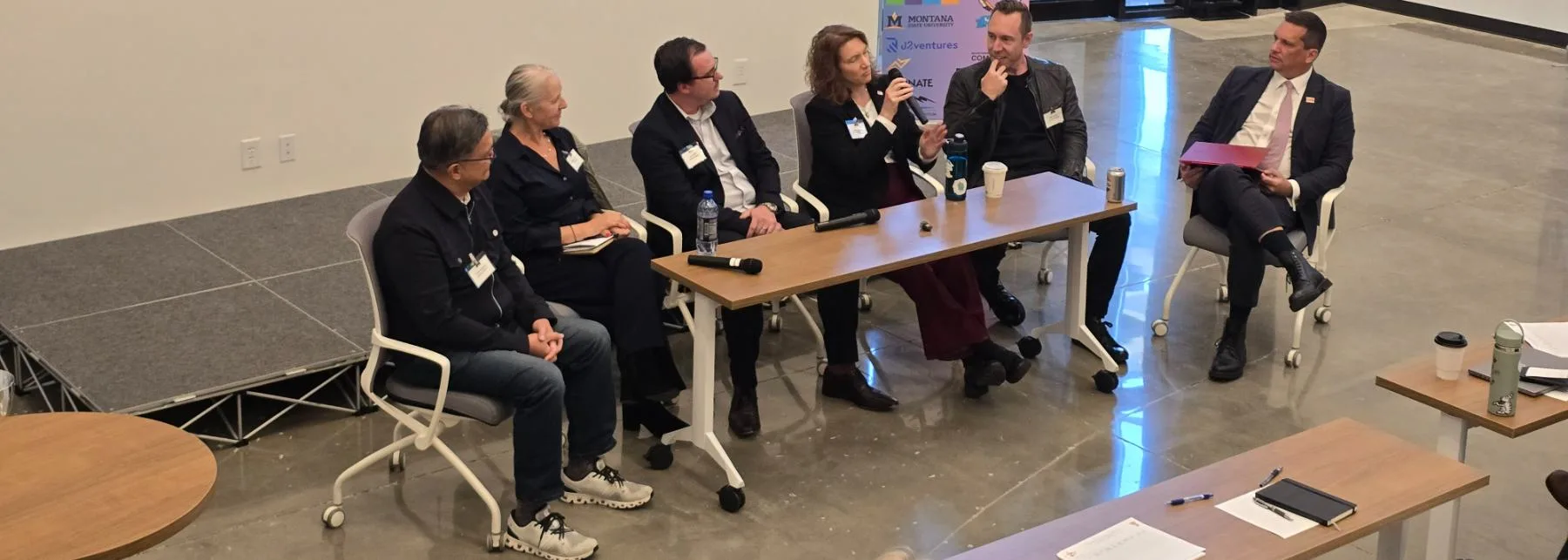 Accelerator & incubator program directors
Your founders can do 20 discovery interviews and still reach demo day unable to explain who buys, why the problem matters, or what they should do next.
Most programs already teach customer discovery. The problem is what happens when founders apply it to their own companies. Interviews stay broad, answers stay polite, and teams can reach demo day still unable to explain exactly who buys, what problem they solve, or why that customer would pay.
Sapienne helps founders ask better questions, work through actual interviews, and turn what they learn into clearer market, product, and funding decisions. The work fits around your existing mentors and cohort calendar. In one Luminate cohort, all 12 CEOs asked for more time with Tanya, and the program brought her back for 2026.
Sapienne goes deeper into how founders actually gather and use market information. Tanya helps them improve the questions, work through real interviews, and connect what they learn to market, product, and funding decisions. The work can sit alongside your existing curriculum or programs such as I-Corps rather than replacing them.
Track whether companies are getting more specific about who buys, what problem repeats, what it costs, which market deserves priority, and what still needs to be tested. By the end of the cohort, founders should be making clearer product and market decisions, not simply reporting that they completed more interviews.
Yes. Earlier companies may still be choosing a customer group or use case. More advanced teams may need stronger answers around value, price, buying conditions, repeatability, or product requirements. The companies do not need to be at the same stage; the work needs to match the decision each one is making.
Sapienne adds depth where your current program needs it rather than replacing what already works. Tanya can teach a focused session, work through company-specific problems, or support founders between workshops. The scope is built around your calendar, existing mentors, and the commercial milestones you want companies to reach.
Sapienne can support a focused workshop, a deeper cohort engagement with company-specific application, or longer support with more individual coaching. The right format depends on cohort size, company stages, your calendar, and what founders need to demonstrate by the end. After the intake call, we provide a fixed written scope and fee.
 Deep tech ecosystem leaders
You are deciding where funding, programs, facilities, or partnerships should go. You need to know what the ecosystem actually needs before you commit.
You may be deciding whether to build a facility, launch a program, fund a new capability, or back a regional initiative. Before millions of dollars and years of work are committed, you need to know what companies, researchers, investors, and other stakeholders actually need—and which needs are important enough to justify action.
Sapienne conducts independent stakeholder research to identify repeated needs, gaps, and priorities, then turns the findings into clear choices about what to fund, build, or coordinate next. For the Colorado Quantum Incubator, 25 structured interviews across industry stakeholders helped establish the needs behind a $28M facility that moved forward with funding and governance approval.
Your team may know the ecosystem better than anyone. Sapienne adds independent research when a board, funder, or partner needs input that is less shaped by internal relationships or institutional priorities. The goal is a clearer picture of what stakeholders actually need before major funding, program, or infrastructure decisions are made.
A survey works best when you already know what you need to measure. Structured interviews help when you are still trying to understand the problem itself: what stakeholders need, where they get stuck, what they have tried, and where priorities differ. That context is often what determines where funding should go.
The engagement can produce a prioritized view of ecosystem needs, strengths, gaps, collaboration opportunities, and strategic priorities. Sapienne also shows where stakeholder groups agree, where they differ, and which needs repeat strongly enough to act on, so leadership can decide what to fund, build, or coordinate next.
Any relevant relationship is disclosed before the work begins. If Tanya has an existing role or connection that could affect the research, it is discussed up front. The engagement can be structured around it, Tanya can recuse herself where needed, or the project can be declined if independence cannot be protected.
A typical Ecosystem Discovery & Roadmap runs 2–3 months. Sapienne conducts the research end to end. Your team helps define the decision, stakeholder groups, and constraints; Sapienne handles interviews, analysis, and synthesis. You leave with priorities leadership can use without asking your internal team to run the study.
 Enterprise R&D & innovation leaders
Two credible opportunities. One R&D budget. Which one deserves the next 18 months?
Your R&D team can have several technically strong opportunities and still not know which one deserves the next 18 months of engineering time and budget. One market may look larger but require expensive qualification and major product changes. Another may be smaller, fit your existing capabilities better, and reach revenue sooner. The technical opportunity alone cannot tell you which path deserves priority.
Sapienne brings outside market research into that decision. We compare customer need, adoption barriers, product changes, qualification effort, time to revenue, and what pursuing one option would delay elsewhere. Tanya has led R&D work inside aerospace, so the research connects back to technical decisions rather than sitting beside them in a report. Leadership can decide which opportunity deserves priority, what it requires from the product, and where the next R&D dollar should go.
Sapienne is most useful when several credible opportunities are competing for the same R&D budget, product resources, or executive attention. That can include choosing an adjacent market, deciding whether another technical milestone is justified, standardizing a requirement, or deciding whether a capability deserves its own product roadmap.
Your internal team knows your technology, constraints, and business better than an outsider. Sapienne adds independent market research around a specific decision. That helps your team test assumptions, compare opportunities, and bring outside customer input into roadmap or portfolio discussions without replacing the people who already own product, strategy, or R&D.
The work can be scoped around one decision that needs stronger market input before the review. Sapienne completes the research ahead of that meeting and turns it into a clear comparison leadership can use. For decisions that recur throughout the year, a longer advisory engagement may make more sense.
Both are possible. Sapienne can support one defined market or product decision over a 12–16 week workstream, or stay involved across a series of connected R&D, market, and product decisions. The right model depends on how often these decisions arise and how much outside research your team needs.
Confidentiality is handled before sensitive technical details are discussed. Where required, Sapienne can work under an NDA and keep client work private. The research is scoped around the market and product decision you need to make without requiring you to expose more technical information than the engagement actually needs.
“There’s a small group of people who can translate deep quantum science into language that financiers and venture capitalists can act on. Tanya is one of them — and right now that’s arguably the most in-demand skill in the deep tech ecosystem.”
CEOs in one Luminate cohort asked for more time with Tanya. The program brought her back for 2026.
Tell us what your team is deciding and where you are stuck. On a 30-minute call, we will determine whether Sapienne can help and which engagement fits. If there is a fit, you receive a written scope covering the work, timeline, deliverables, and fee.